Editor’s note (11/2025): As I’m transferring this over to the website, I’m reading things I wrote almost a year ago and thinking that now, with more experiences under my belt and more familiarity with the language and culture, that I could phrase some things slightly better or explain ideas more correctly. However, I think overall what I wrote is OK and also that I might go mad going back and rewriting everything, so I will leave it mostly untouched as a snapshot of a moment in time in my life.
Hi everyone,
Sorry about the long delay in getting this one out. December and January at work has been pretty busy for me, but now that Chinese New Year has arrived and school is out, I have lots more time to catch up.
This edition will be on a few things that I think are interesting and/or I have a lot of pictures that I can share. Hope you like it.
Food
I’ve been meaning to write more about the food here in Chengdu for a while, and now that I have at least an entry-level familiarity with the local cuisine it seems like an appropriate time.
First of all, it’s important to note that saying “Chinese food” can be a bit confusing when you’re talking about eating in China. There are 8 distinct officially recognized “great cuisines” within Chinese food (see map below), and really there are hundreds of smaller culinary traditions across every region of the country. Even tiny rural towns are often regionally known for a particular dish or agricultural product. And so, if you’re in China and a Chinese person asks you what you want to eat for dinner and you say, “Chinese food”, they’ll most likely have a good laugh at your expense (don’t ask how I know this).
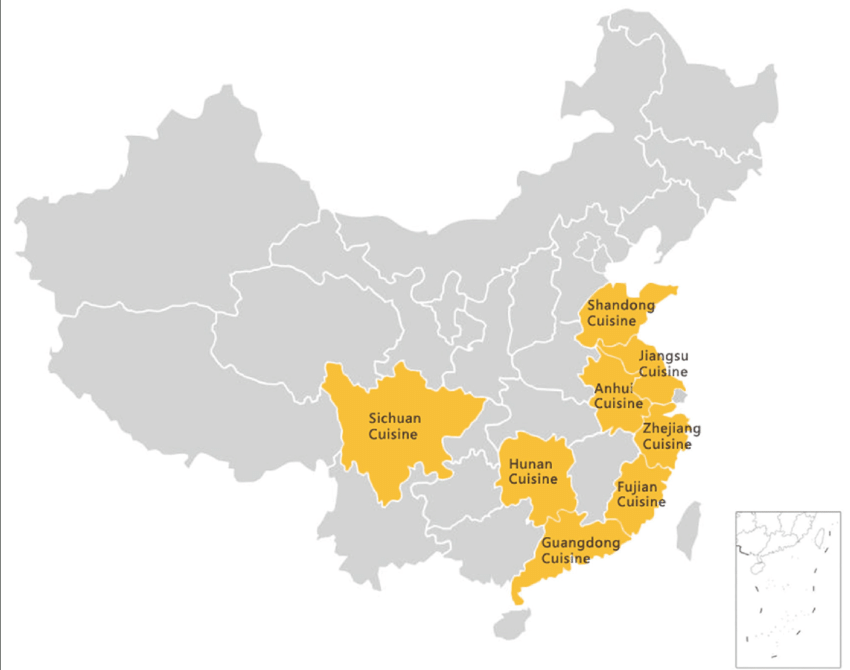
A better response would, of course, be “Sichuan food!”. Sichuan cuisine is one of the most, if not the most, famous kinds of Chinese food globally. It’s characterized by its bold, spicy flavors created using local chili peppers, garlic, and Sichuan pepper. In Chengdu, it being the capital of Sichuan province, obviously most of the restaurants serve “Sichuan-style” food, but there are also many restaurants with food from every corner of China and from abroad.
Here are some photos I’ve taken, some Sichuan dishes some not. I’ve added some other people’s photos to supplement ones I’m missing.
First, two classic Sichuan dishes that I really like but I don’t have any photos of:

Kung Pao Chicken, grilled chicken with peanuts, onions, and chili sauce.

Mapo tofu. Tofu with spicy sauce, onions, and other vegetables. It’s so good, it doesn’t even really taste like tofu.
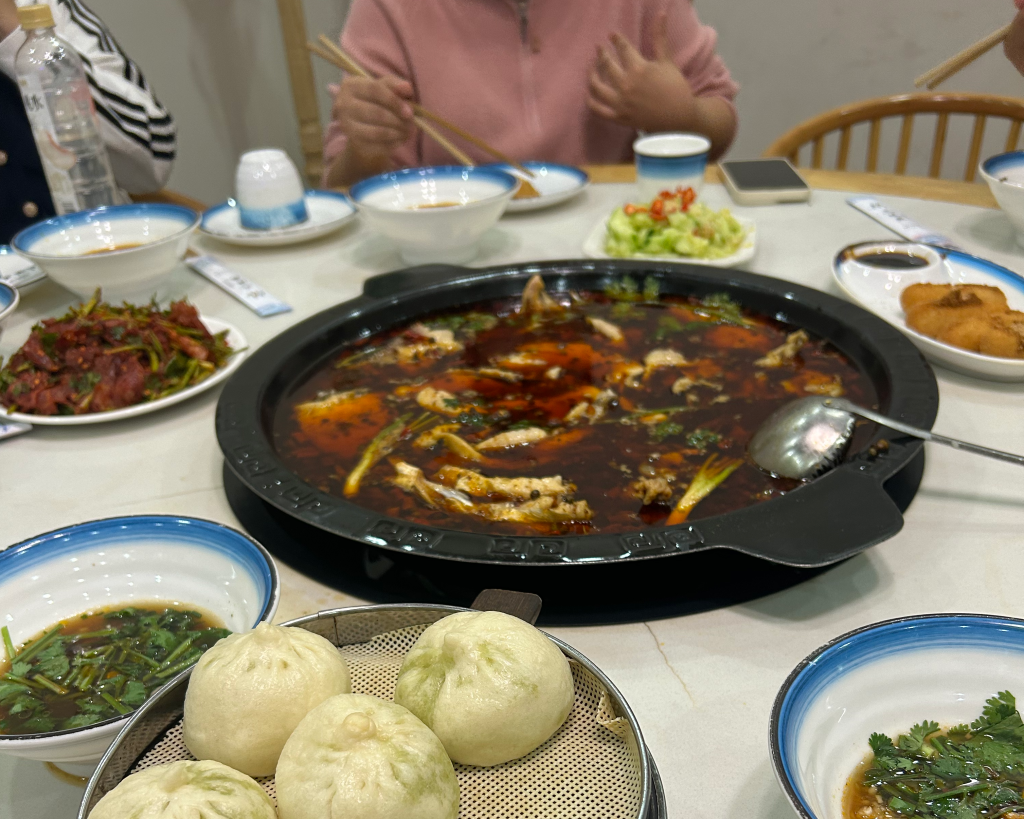
Far and away the most popular kind of dining in Chengdu is hot pot. There are hot pot restaurants all over the place, you’re never more than a few minutes’ walk away from one. I wrote a little bit about hot pot in the October letter. It’s pretty self-explanatory: family style dining where you cook different meats and vegetables in semi-boiling chili oil. Everyone in Chengdu eats it regularly; if someone asks you to go to dinner in a group setting, odds are good that it’ll be hot pot. Really tasty, especially when it gets cold outside.
If hot pot is the top dog, barbecue (in Chinese: 烧烤 “shao kao”) is probably #2. There are a few different ways they do it. There are a lot where you order the kinds of meat and vegetables you want; they bring them uncooked to you and you cook them yourself on a stove at the center of the table.
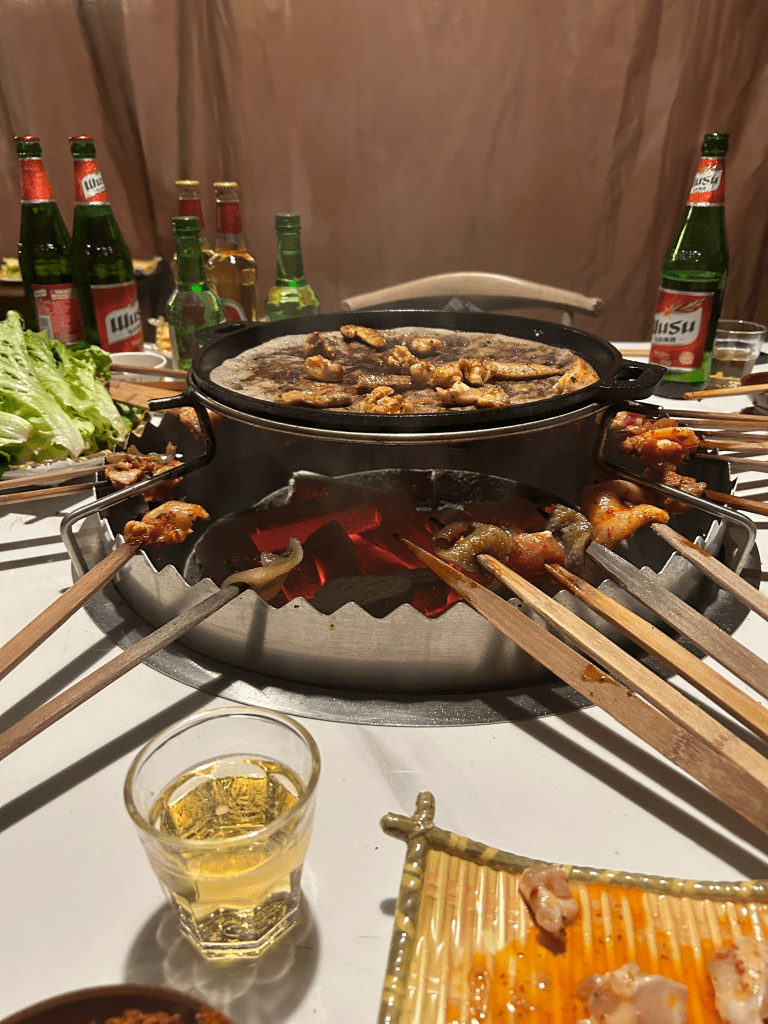
There are others where an employee will do the cooking and flipping over, and still others where you order what you want, and the waiter will bring everything out on skewers already cooked for you. At all the above, you get a divided plate where you can go pick your own seasonings and sauces à la carte that you can dip your barbecue in.
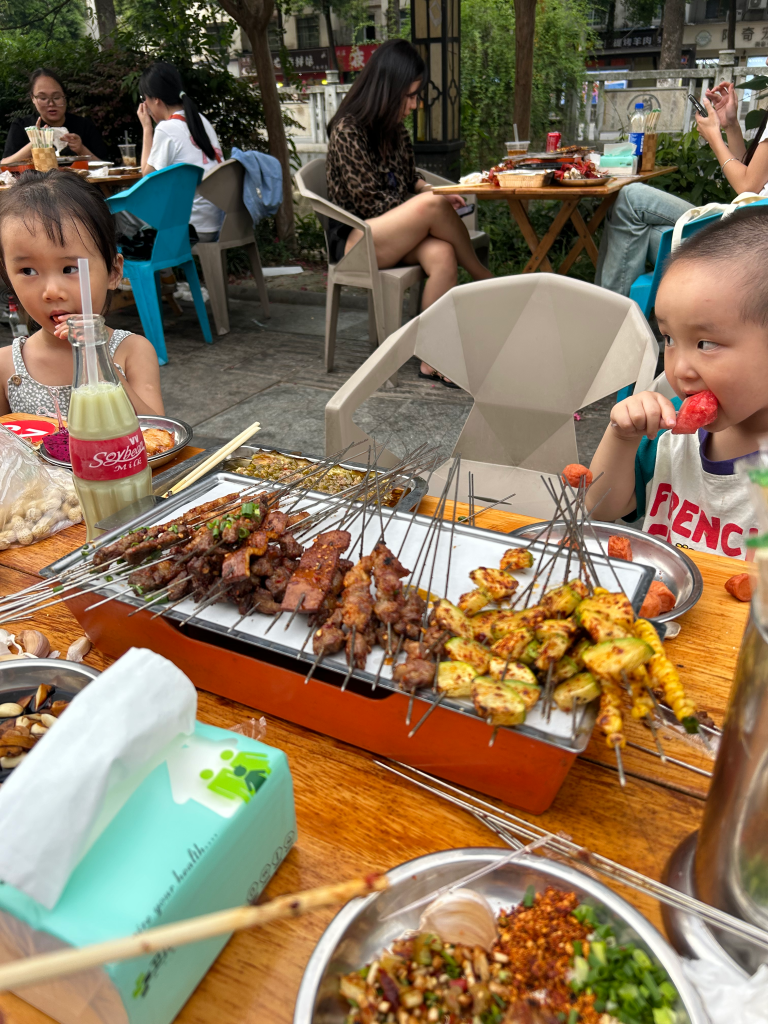
Skewer BBQ featuring some of my coworkers’ kids ^

^ Awesome barbecue restaurant in a small mountain town in rural Sichuan. The boss lady used a lettuce leaf to clean the stove and then cooked a bunch of meats and veggies on a huge open flame right in front of your face and you kinda just had to be quick grabbing your stuff before the flames went up again. Also the walls were all painted to look like Western “streetwear” brands like Supreme, Off-White, Bathing Ape, etc.
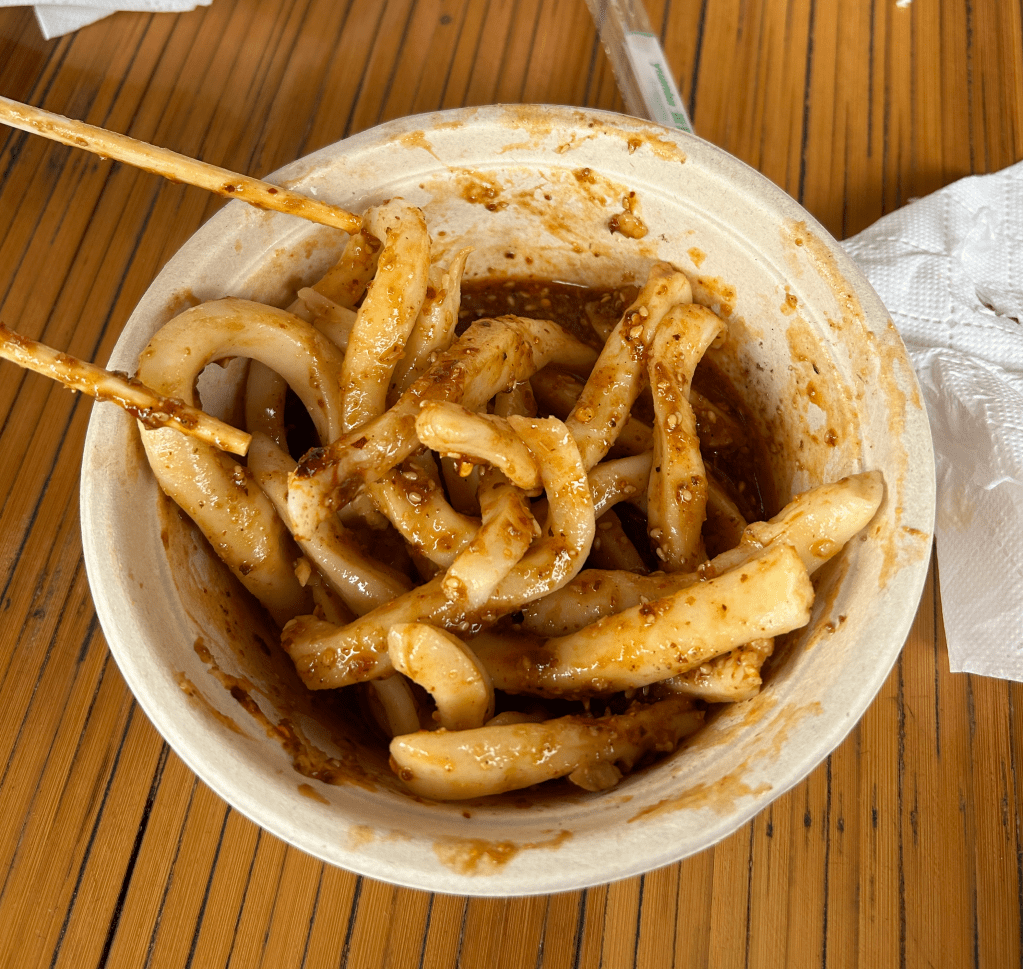
^Tian Shui Mian, sweet water noodles. Soft and chewy noodles seasoned with spicy chili sauce but also with sugar and another sweet seasoning. Gives it a really good flavor, I went back for a second bowl.

Every day at work, the chef makes lunch for all the teachers. It’s always different from what the students eat, and you can actually send him a request for a meal you want him to make for lunch and he’ll do it if it’s in his wheelhouse. They send a schedule at the start of the week, but I never bother to translate it so every day I get a surprise. I make a point to eat everything they serve and almost always I really like it. A lot of the meals are Sichuan-style, some are not. Almost always it will be some kind of meat and vegetables in a sauce that you can put over a bowl of white rice.
Here are some of them:
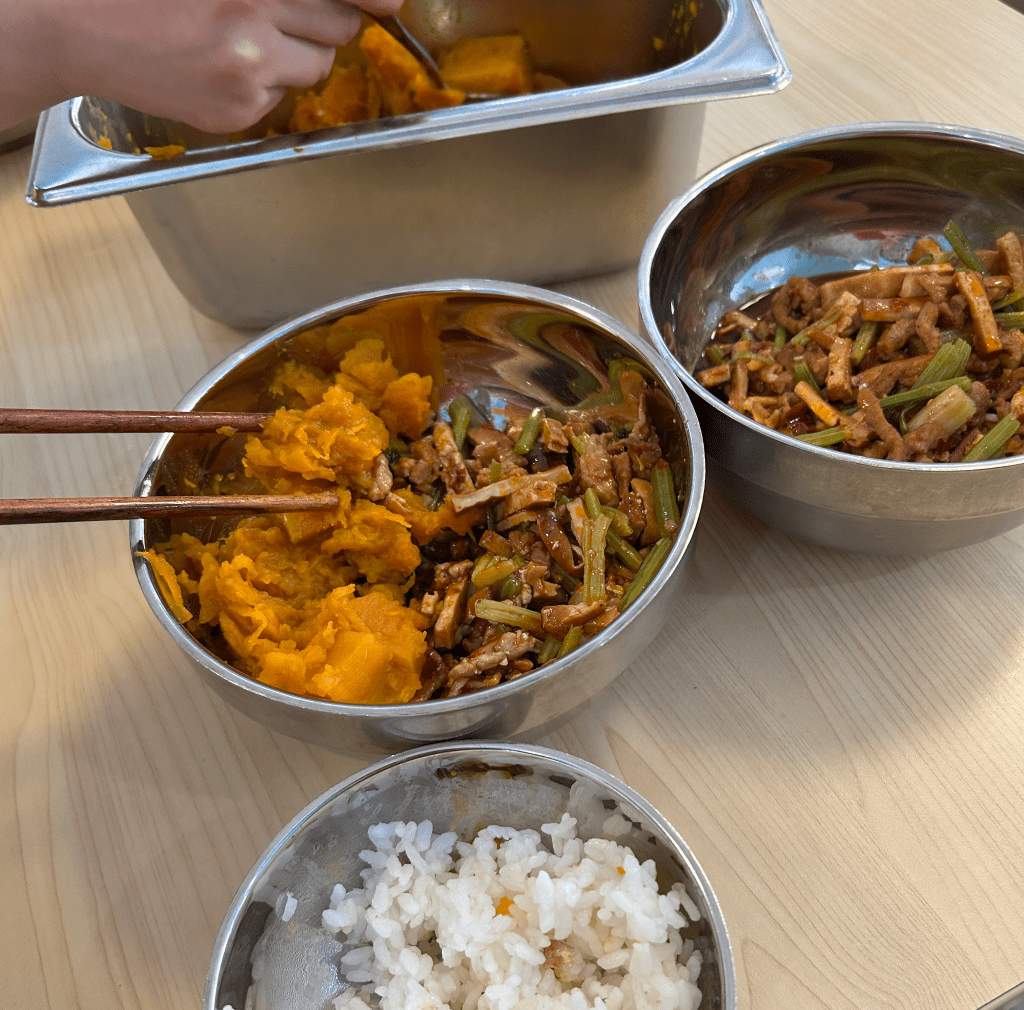
^ This is a classic Sichuan dish that in English is called “shredded fish-flavored pork” with a side of sweet potatoes. I don’t really think it tastes “fish-flavored” but it’s delicious.
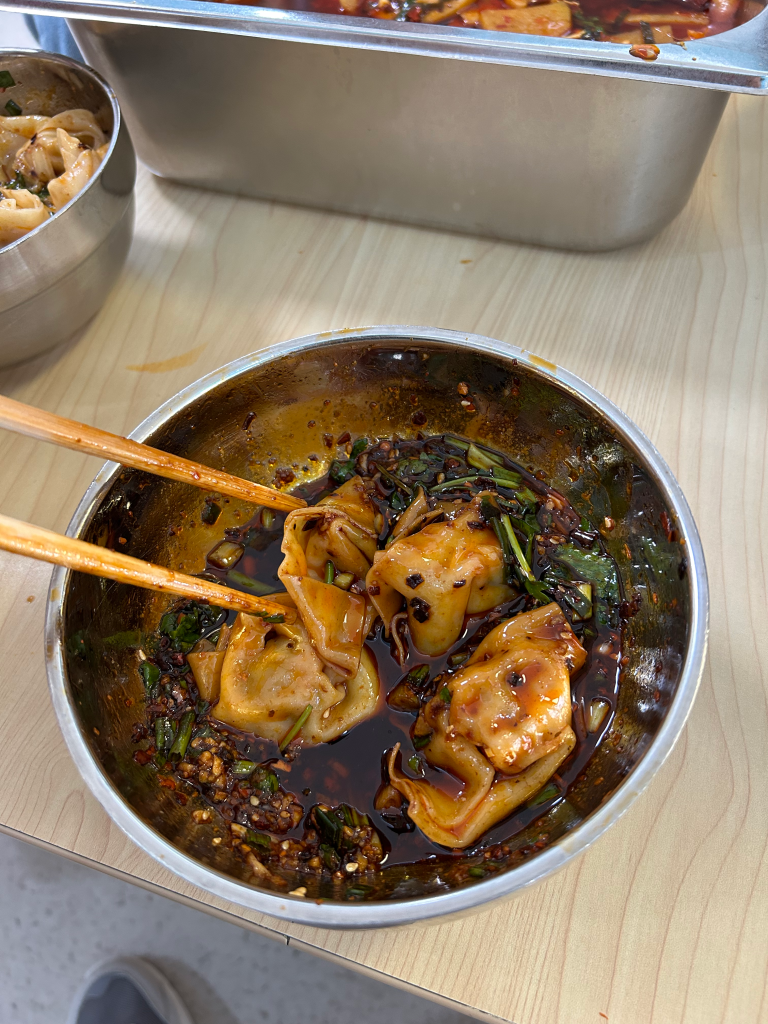
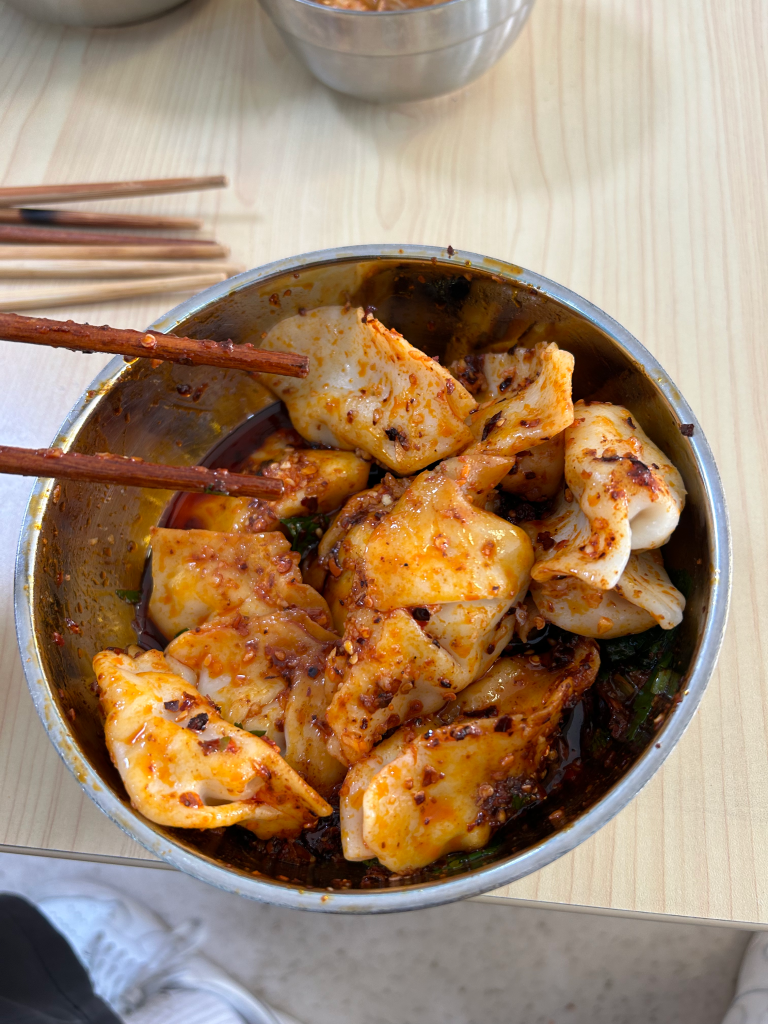
^ These are wontons filled with pork and veggies and seasoned to your liking with chili oil, soy sauce, green onions, garlic, etc. In the local dialect they call them “chao shou”; this is one of my favorite dishes I’ve had in Chengdu.

^ Wide noodles in chili oil. The sauce might be Sichuan style but the type of noodles is from Yunnan province (south of Sichuan, borders Vietnam and other SE Asian countries).

^ Rabbit with peppers and duck eggs. I’m not sure where its’ from. Pretty tasty but too many little bones.
I’m realizing I didn’t take as many photos of school lunches as I thought, so I’ll send more in the future.
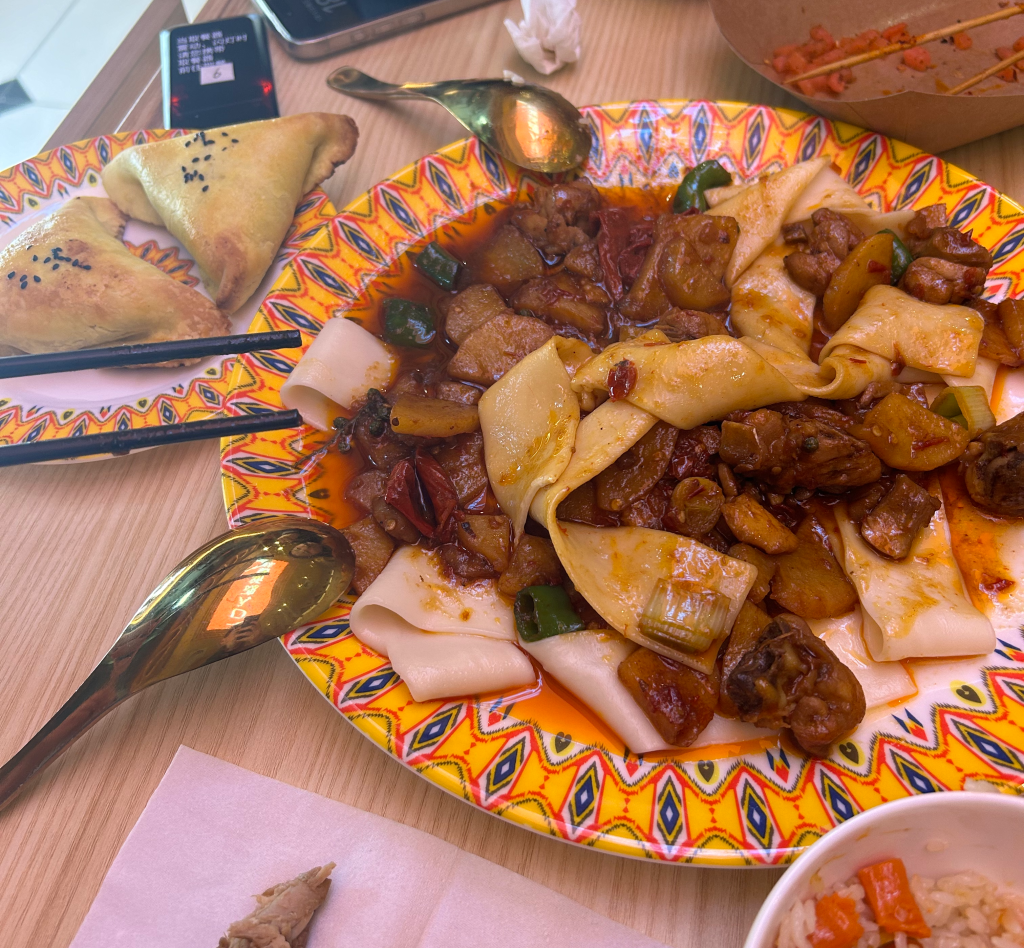
^ This is from a restaurant that serves Hui and Uyghur food from Xinjiang (Western China). This was their signature chicken dish with potatoes and super wide noodles, which I really liked.
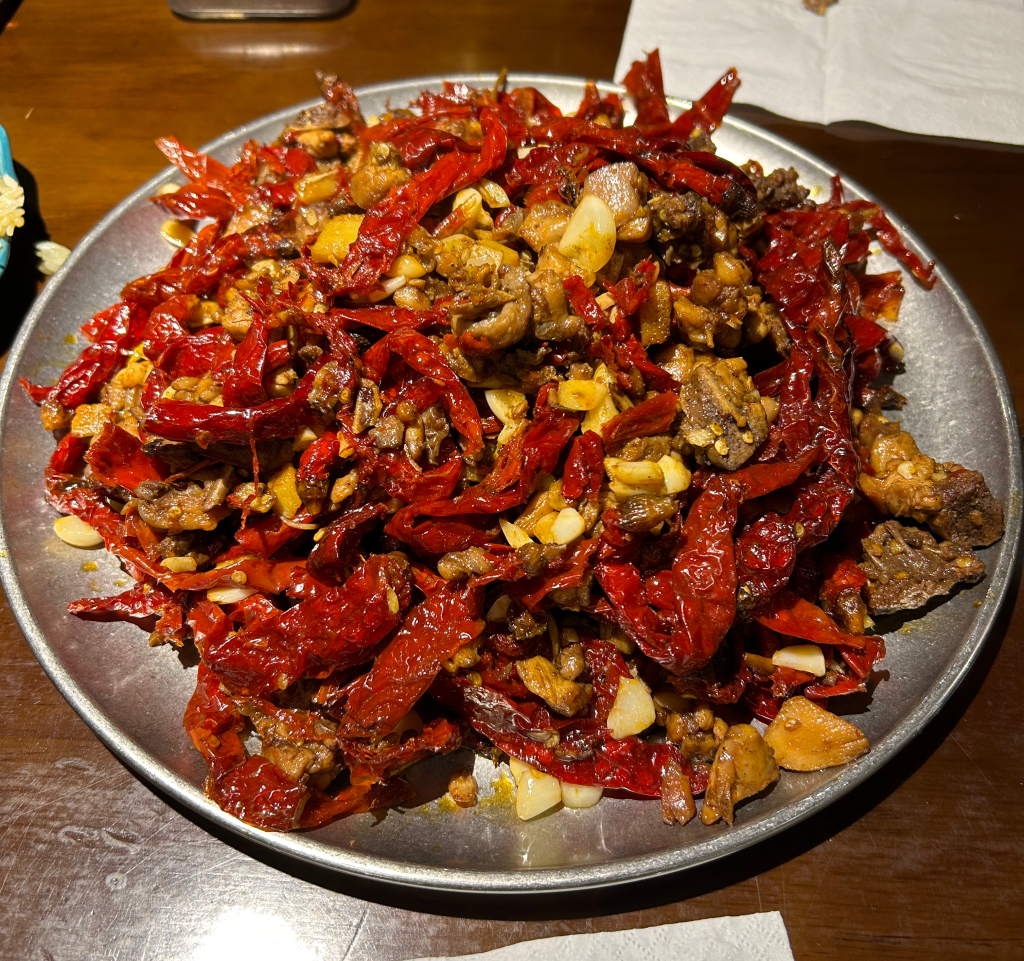
^ This is from a different Hui restaurant, this dish was grilled chicken, nuts, and Xinjiang peppers. Really good. The Hui ethnic group are ethnically Chinese Sunni Muslims that have been in China for over a thousand years. As such, this restaurant is completely halal.

This was a big plate of fish + toppings (the fish is buried under everything else). I kind of doubt that this is a traditional dish because its covered in French fries, but anyway I thought it was really great.
That’s all I’ve got for now on food, but I’ll just keep sending more as I try more.
Chinese Names
When I started writing these, one of the things I wanted to cover was the Chinese language/writing system, as it is quite different from what we’re used to and isn’t really very well understood in the US. Obviously, the topic is far too large to ever cover in a few paragraphs, but it might be of interest to sprinkle in small details here and there.
I think a good place to start is Chinese names. A few weeks ago, I finally got around to picking mine: 龙浩然 In the Latin alphabet/pinyin: Long Haoran or Lóng Hàorán. (Editor’s note: after becoming more acquainted with Chinese, I actually picked a different name for myself, but I’ll leave this in here because I think it’s still a helpful example)
In Chinese, family names go first and are almost always just one single character. So in my name, the family name is 龙 or Long. That means that one’s personal name comes second and is almost always either 1 or 2 characters. In very rare cases, a personal name could be more than two characters, usually it’s because the person is an ethnic minority that is transliterating their name from their native language into Chinese. In my name, the personal name is 浩然 or Haoran. (When talking about this, I’ve started using the terms “family name” and “personal name” because saying “first/last name” just makes it more confusing.)
Chinese family names (AKA surnames AKA first names) are passed down through the father. Take for example, the president of China, Xi Jinping. Xi Jinping’s father was named Xi Zhongxun, and Xi Jinping’s daughter is named Xi Mingze. In China, wives do not take their husband’s family name, so a mother will usually have a different family name than her children.
Chinese personal names are chosen in many different ways. One way is by choosing characters that invoke personal qualities that parents want their child to embody. Names that mean wise, successful, honorable, studious, strong, patriotic, amiable, noble, beautiful, bold, etc. are common. In Chinese culture, names can be an important augur of a person’s future, for better or worse. For this reason, I stopped trying to make my personal name sound like “Patrick” because the character 怕 “Pa” that I would likely need to use means “to be afraid” or “to dread”. Not exactly the omen I want for myself…
Another way people choose names for their children is through family tradition. Unlike in Western cultures, sons and daughters are never named the same thing as one of their parents i.e. John Smith Jr. Instead, a family often will have a traditional Chinese poem that determines children’s personal names. It’s a bit complicated, but basically generations in the past, a family chose poem that will determine one character that each child in each generation will share, and each will have a unique second character. For example, Mao Zedong had two brothers: Mao Zemin and Mao Zetan. “Ze” is the shared generation name, and Dong, Min, and Tan are taken from elsewhere in the poem. In the next generation, the family would move to the next character in the poem for the shared name and so on (so maybe a second gen would be Mao Linyue, Mao Linwei, etc.) Not every family follows this, but it isn’t uncommon. Some families have records of relatives going back hundreds of years following these naming conventions, using 1,400-year-old poems from the Tang Dynasty, which is just fascinating to me.
I chose Haoran because it’s close to “Horan”, but it’s also an actual Chinese personal name that real Chinese people have, loosely translated to “vast wilderness” (I asked every Chinese friend or colleague that I could about the name to make sure I hadn’t stumbled into some kind secret embarrassing meaning, but they all liked it so I took that as a green light.) I chose 龙 Long because it means dragon and the dragon is my Chinese zodiac, as well as that the character seemed way easier to write and pronounce than some of the other options.
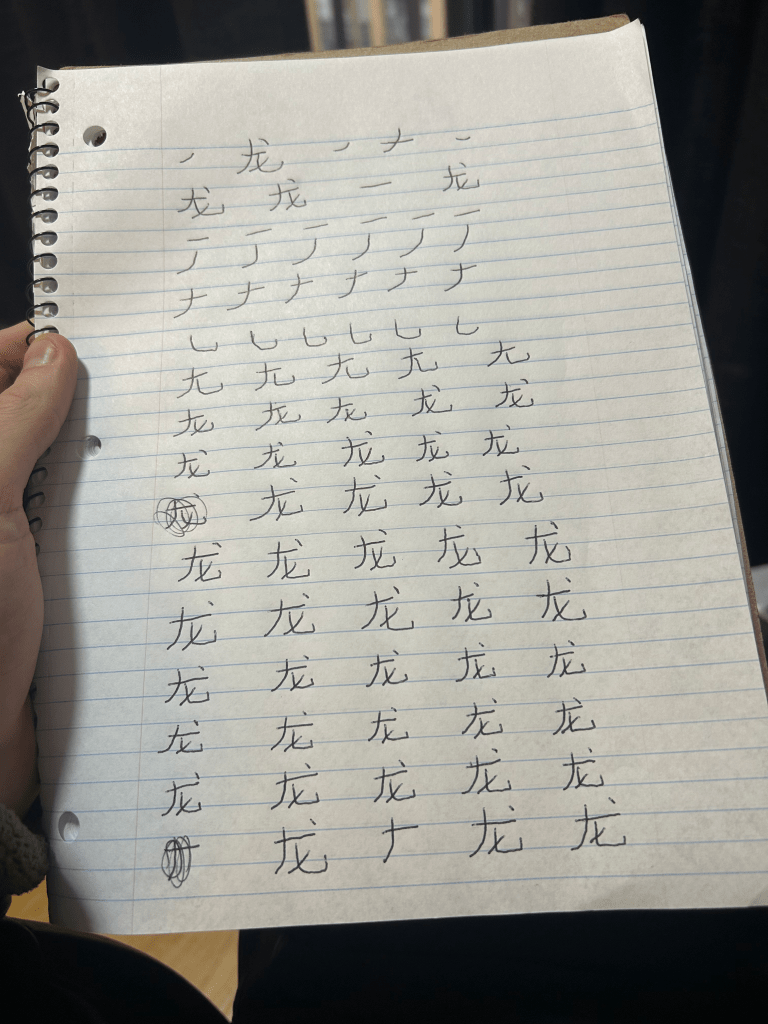
^ The learning process. These were the not-great first drafts. Now I’m able to write the three characters of my name pretty well plus maybe 20 or so other characters. Slow and steady.
Miscellaneous
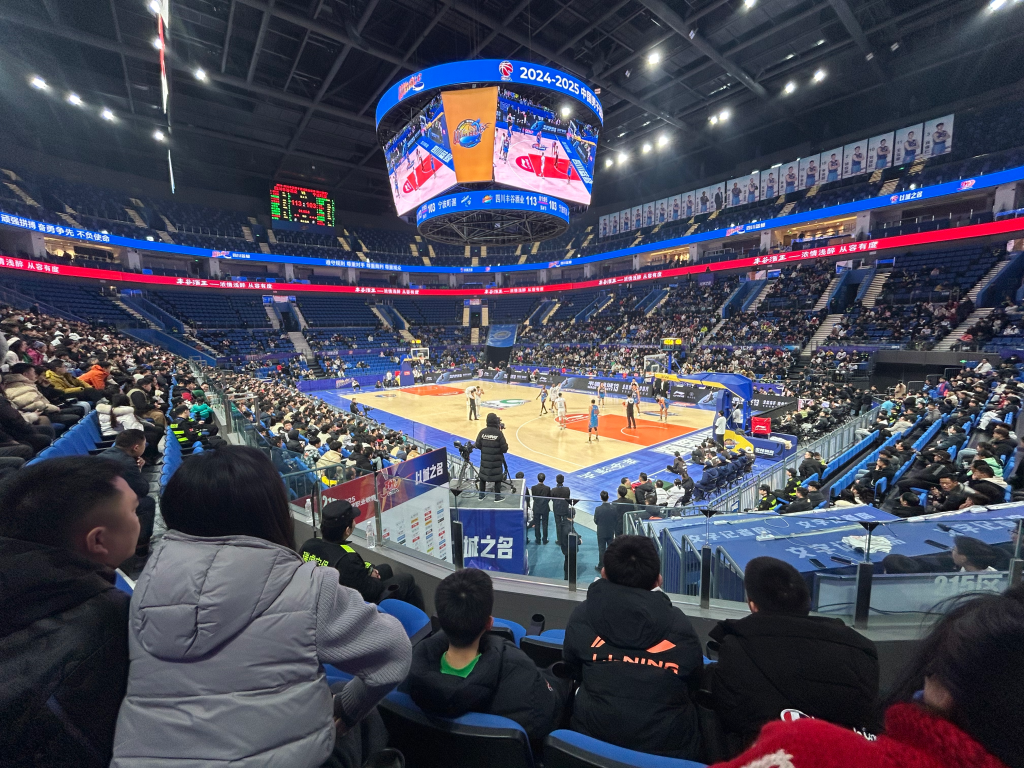
The professional basketball team for Sichuan actually plays only one metro stop away from my apartment. Funnily enough, I made a local friend playing soccer that works at the stadium and he was able to get me and Jia-Le, the P.E. teacher at my school, into this regular season game for free.
It was a good time, there were a few thousand people there but I think there would’ve been more had the two teams not been near the bottom of the league standings. The best player on Sichuan is an American named Edmund Sumner, who actually used to play for the Pacers and is leading the Chinese league in scoring.
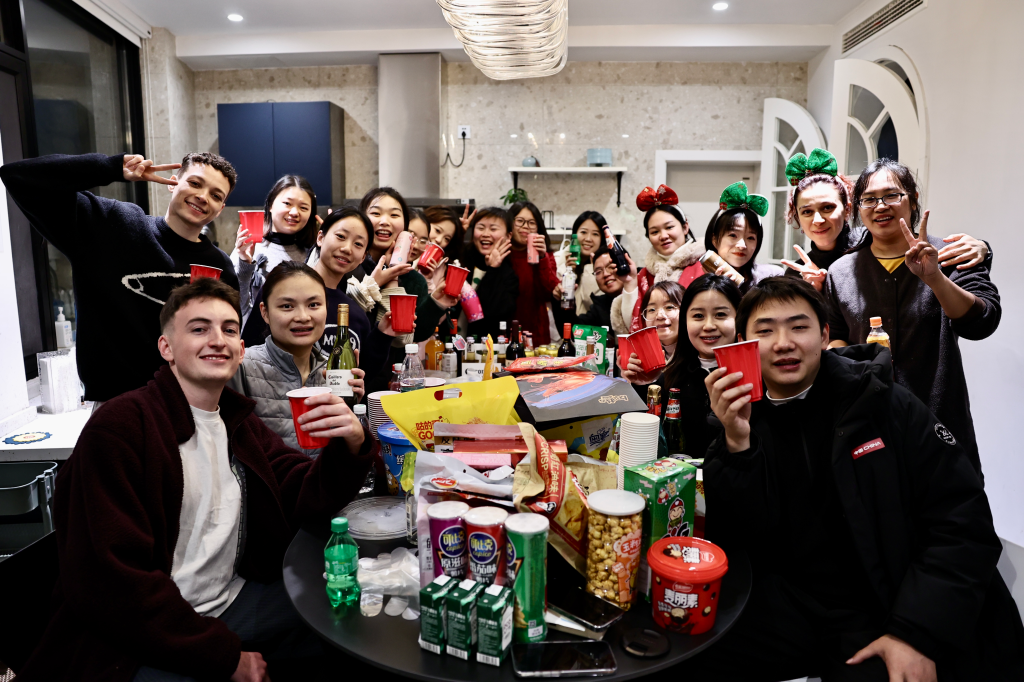
Went on a field trip with students and parents into the mountains. Had a Christmas Party when they went to bed.

New Year’s Eve.

It’s hard to tell from the photo, but this is the largest building in the world by surface area. It’s something like 18 million sq ft and apparently it was a passion project bankrolled by a Chinese billionaire at an incredible loss.
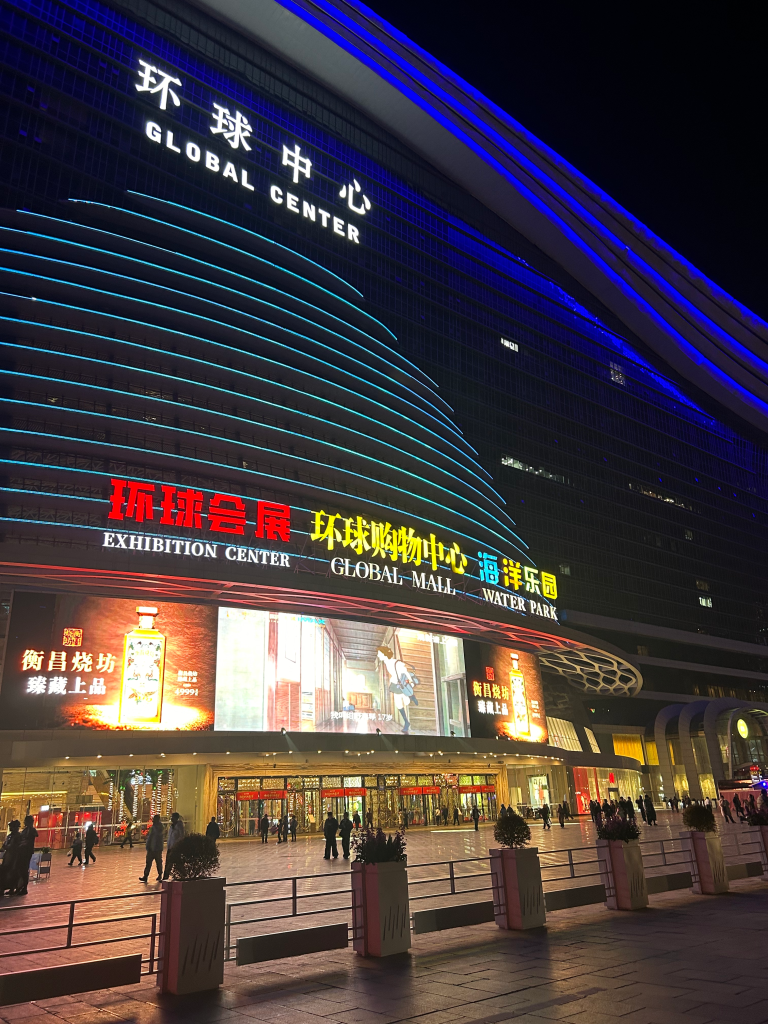
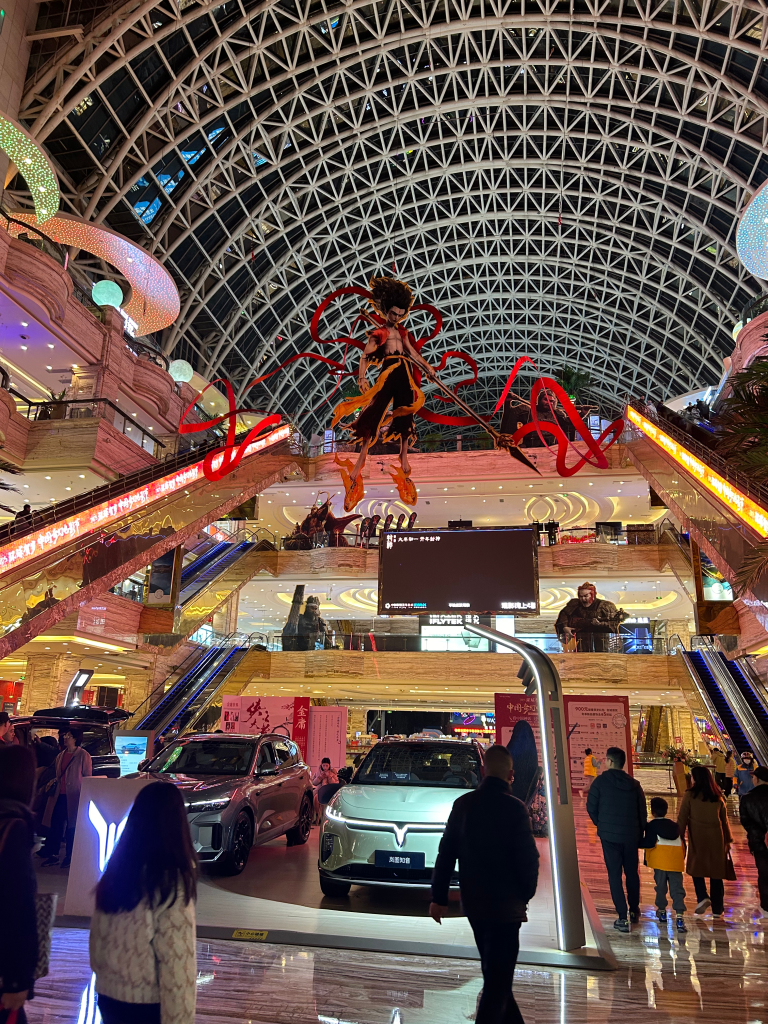
Part of the mall inside the biggest building in the world. I kinda just wanted to go inside so that if in the future someone says “Wow, that’s a big building”, I can go “Nah, not really.”

I’m not sure what these art installation things are called, but they’re in like every social media video about Chengdu.

Saw a stranger had this in public and had to ask her for a photo. Luigi’s very popular over here, at least among women.

Every month we go to the horse stables and half of the trip is explicitly devoted to feeding the horses.
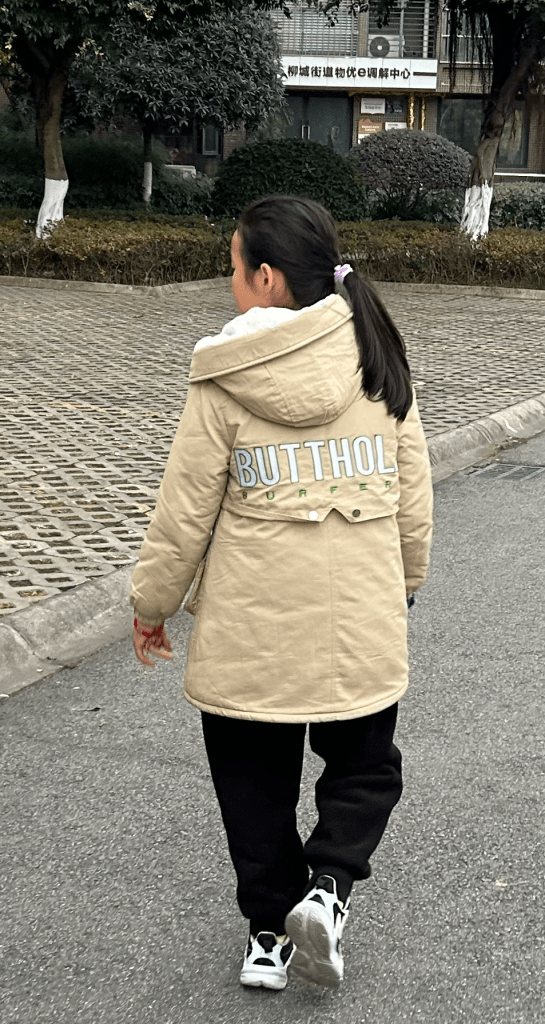
It’s pretty normal here to see people wearing clothes that have letters in English or in the Latin alphabet but are sort of either gibberish or real words that together don’t mean anything, but this one was so egregious I had to get a picture.

No comment.
In early February, I’m taking advantage of the time off to do some traveling. I’ll be flying to Bangkok, going to the beach for a few days, and then flying to Hong Kong and making my way back to Chengdu via high-speed train, stopping in a few Chinese cities on the way (see the loose itinerary map below.)
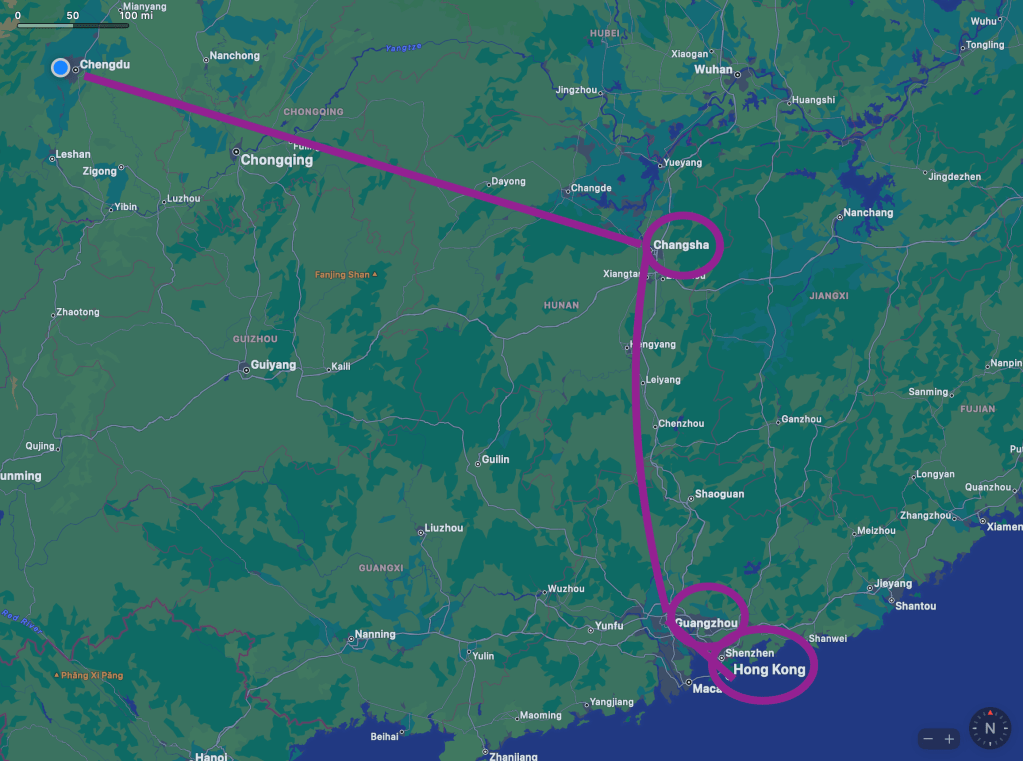

The next installment covering that trip should be out in March. I hope you are all doing well, and I wish you good fortune in the new year. Thanks for reading.
新年快乐!Xin Nian Kuai Le!
Patrick
 Pat's Blog
Leave a comment