When I left off, I was leaving Thailand for Hong Kong.
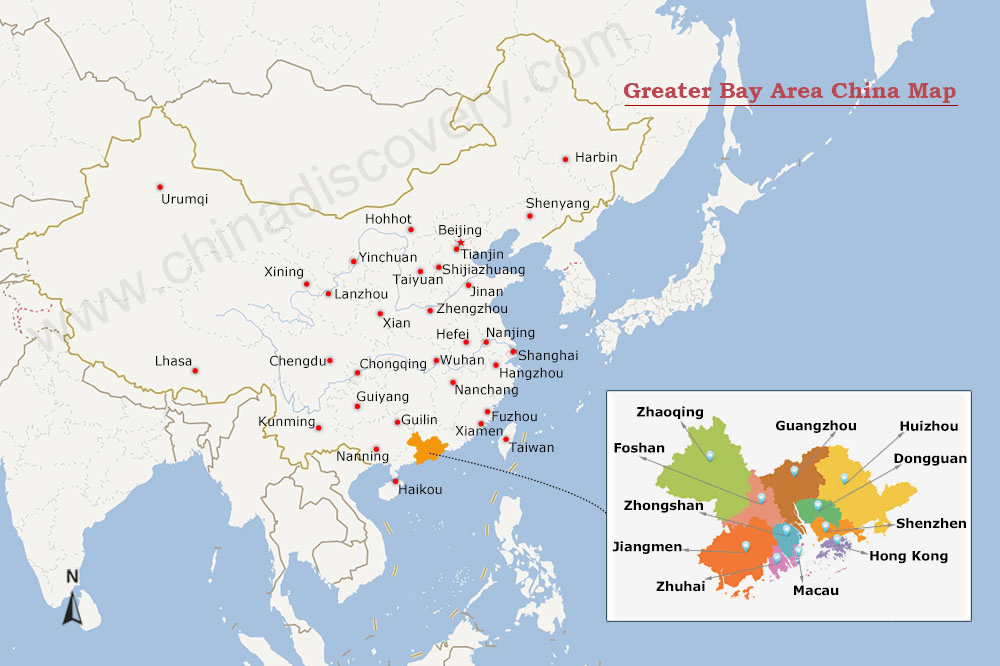
The map below is a good illustration of China’s “Greater Bay Area”. I went to Hong Kong, Shenzhen, and Guangzhou, three of the four most well-known cities in this cluster, the other being Macau. Macau (formerly a Portuguese colony) and Hong Kong (formerly a British colony) are part of China, but are governed as Special Administrative Regions, giving them a degree of autonomy from the mainland under the principle of “One Country, Two Systems”. For example, in Hong Kong there is no “Great Firewall” that requires you to use a VPN to access sites like Google and Meta. The remaining cities are all part of Guangdong Province. This relatively small area has a population of ~86 million, and as the region continues to develop it has been called a “megalopolis” or a collection of large cities that combine to form a single massive continuous urban area.
Unfortunately for me, I think I ate something bad in the tiny Krabi airport on my way out, and was hit with a bout of food poisoning that dampened my mood for my few days in HK and Shenzhen. I still was able to get some pictures, but in general I wasn’t able to do as much as I wanted and I barely felt like eating anything beyond rice or bread, so I don’t have much in the way of food pictures or commentary. Next time!

By some stroke of luck, or because Hong Kong is so compact, my hotel actually ended being right across the street from Chungking Mansions, the inspiration for the great 1994 HK film of the same name:
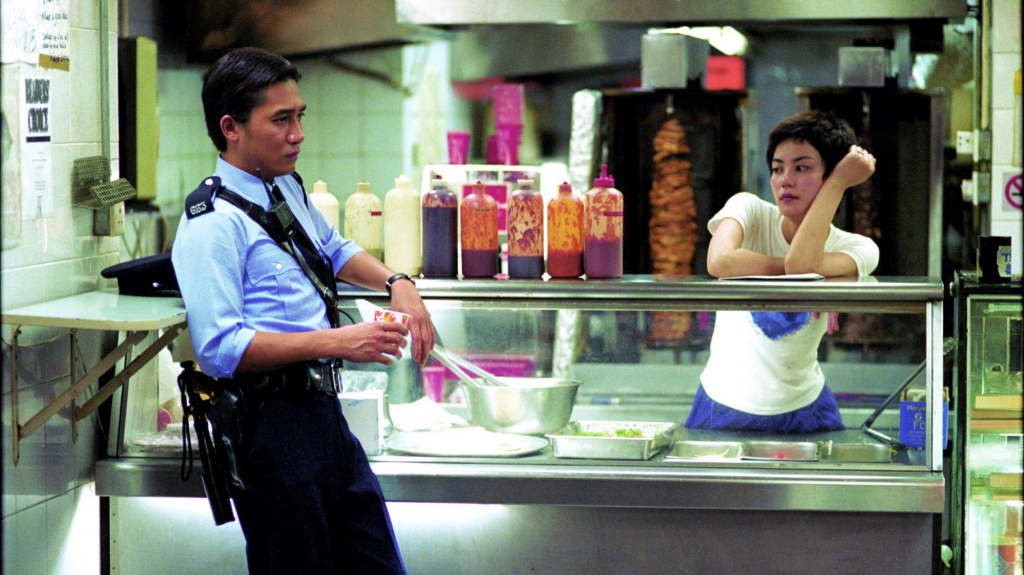
Though my personal favorite HK movie is Fallen Angels, also by director Wong Kar-wai.
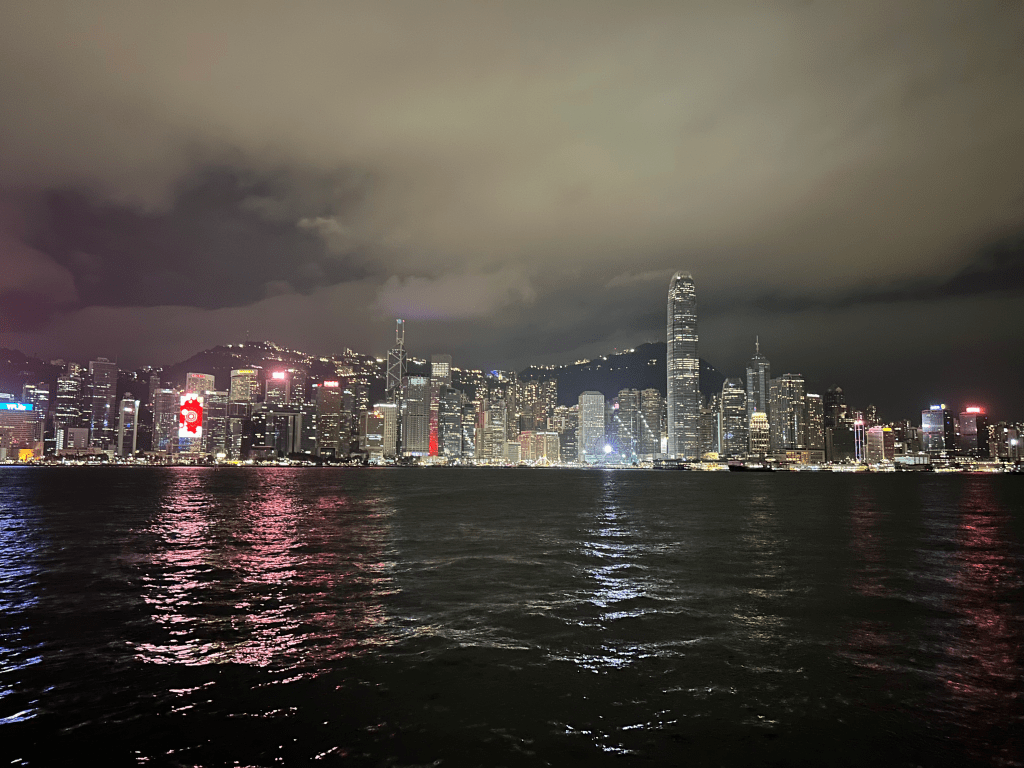
^ View across Victoria Bay. I couldn’t get good pictures of the skyline at night.


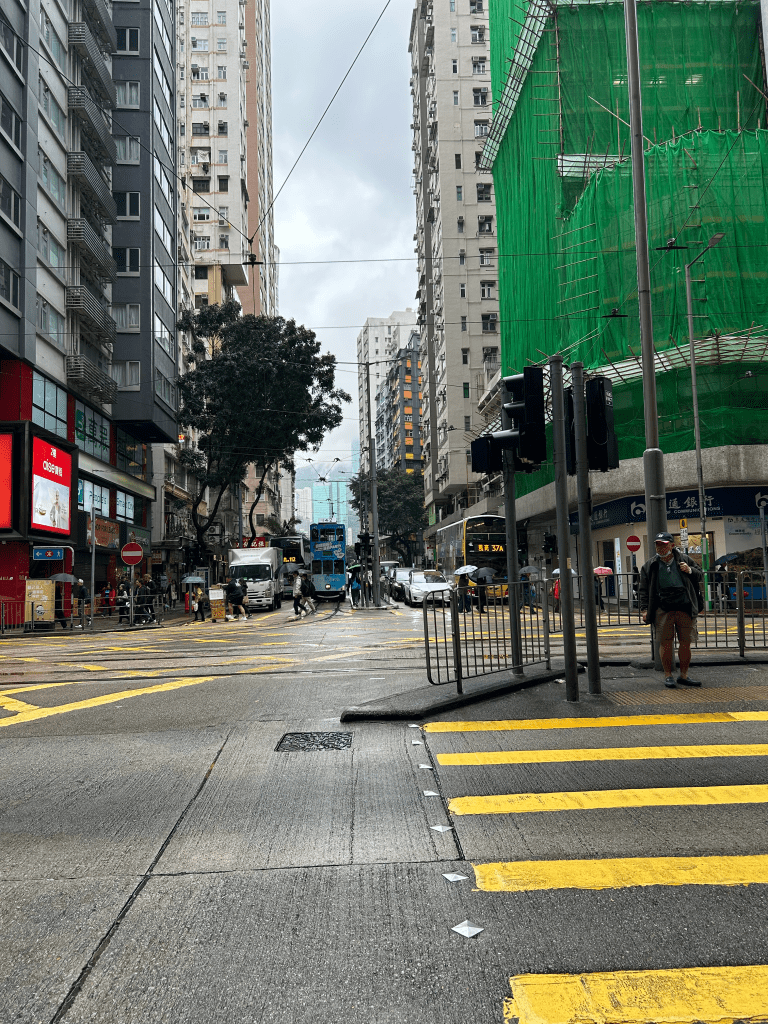

On my way out I wanted to try some pastries, but when I followed the GPS to the pastry shop this was the line. Oh well.
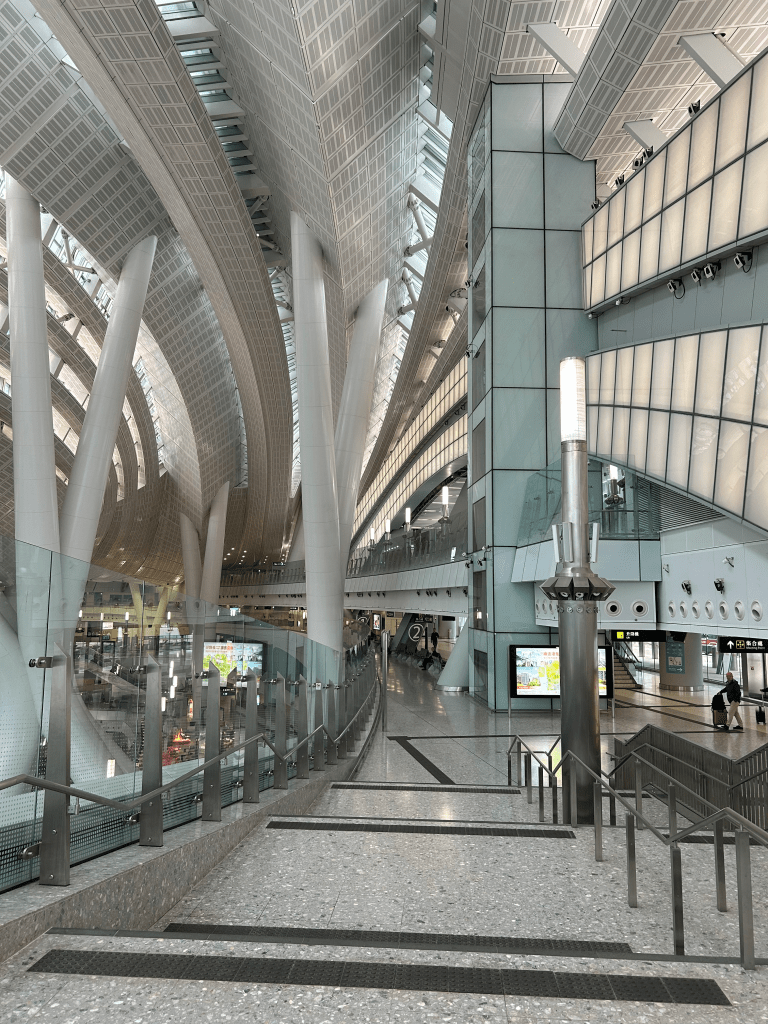
^ West Kowloon Railway Station. Very beautiful design and right in the heart of Hong Kong.
I thought Hong Kong was a very cool city; the mixture of British influence with traditional Cantonese culture was interesting, the city itself is compact and dense, and in some ways it is both futuristic and aging. Like I said, I wasn’t there for very long and illness limited my experience, but I did like it and I think it’s worth a visit if you’re nearby.
From West Kowloon I hopped on a high speed train to Shenzhen. Travel time was only about 15 minutes, but because of One Country, Two Systems, you have to go through customs when entering the mainland as if you’re coming from another country.


When you think about Shenzhen, the first thing you need to grapple with is how new it is. In the late 1970s, what is now Shenzhen was basically a fishing village home to a few thousand people. Today, it’s a megacity of nearly 15 million people and the heart of the Chinese tech world (sometimes people call it “China’s Silicon Valley”).

The development of Shenzhen was the deliberate strategy of Deng Xiaoping (pictured above), the leader of China during the late 70s and 80s following the death of Mao Zedong. It was part of the larger Chinese “Reform and Opening” period (that still continues to this day) that aimed to lift China out of poverty by selectively opening parts of the economy to domestic and foreign capital. Modern Shenzhen is often cited in support of Deng’s strategy.
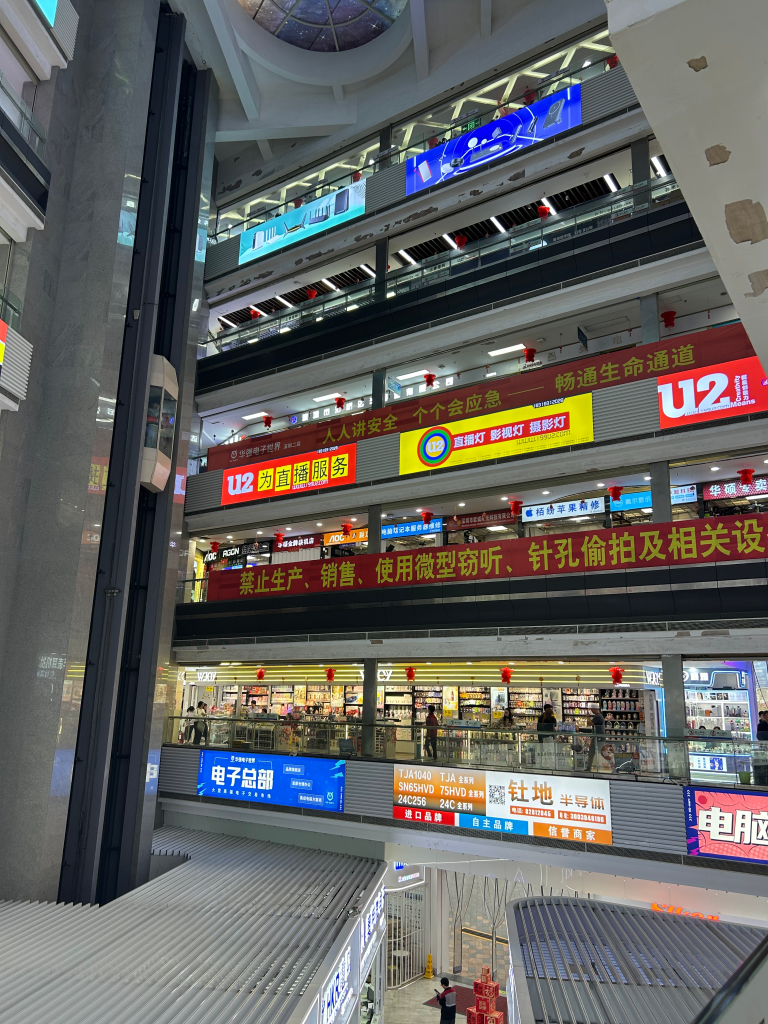
^ This isn’t a great picture but there are so many of these technology malls where every floor has a different genre of new consumer tech products that you can walk around and try for yourself. I’m kicking myself that I didn’t get any better photos.
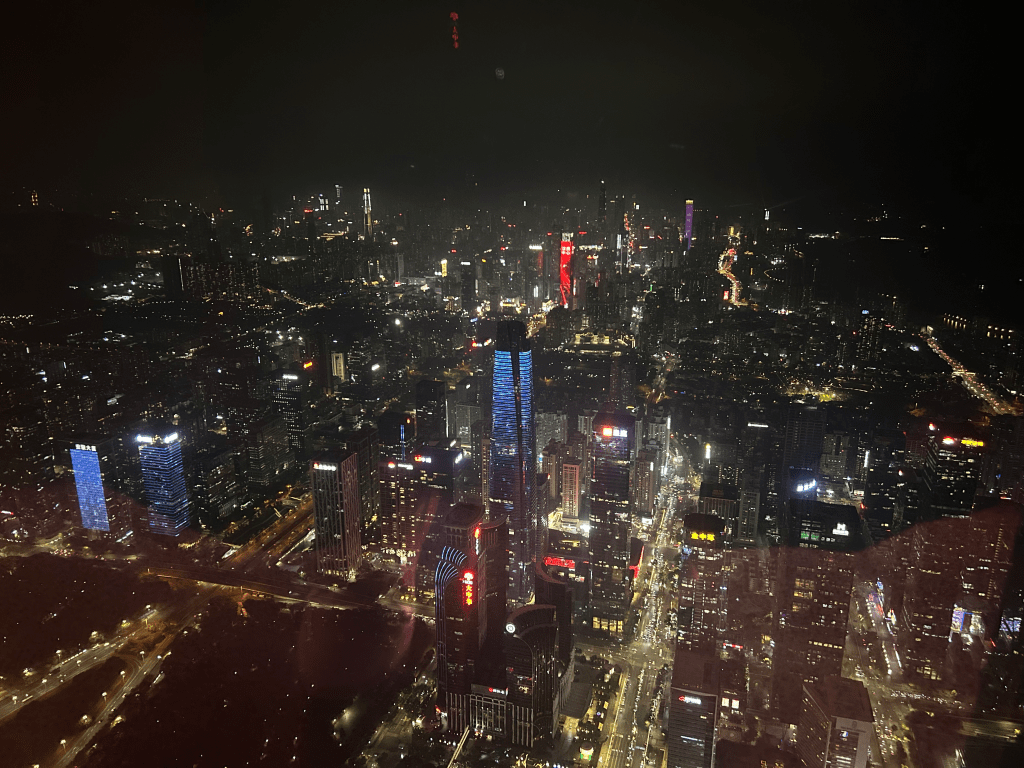
^ View from the top of the Ping’An Financial Center, the 5th tallest building in the world.

^ View of the previous building from the ground. Pictures don’t really do it justice, it looks absolutely massive in person.
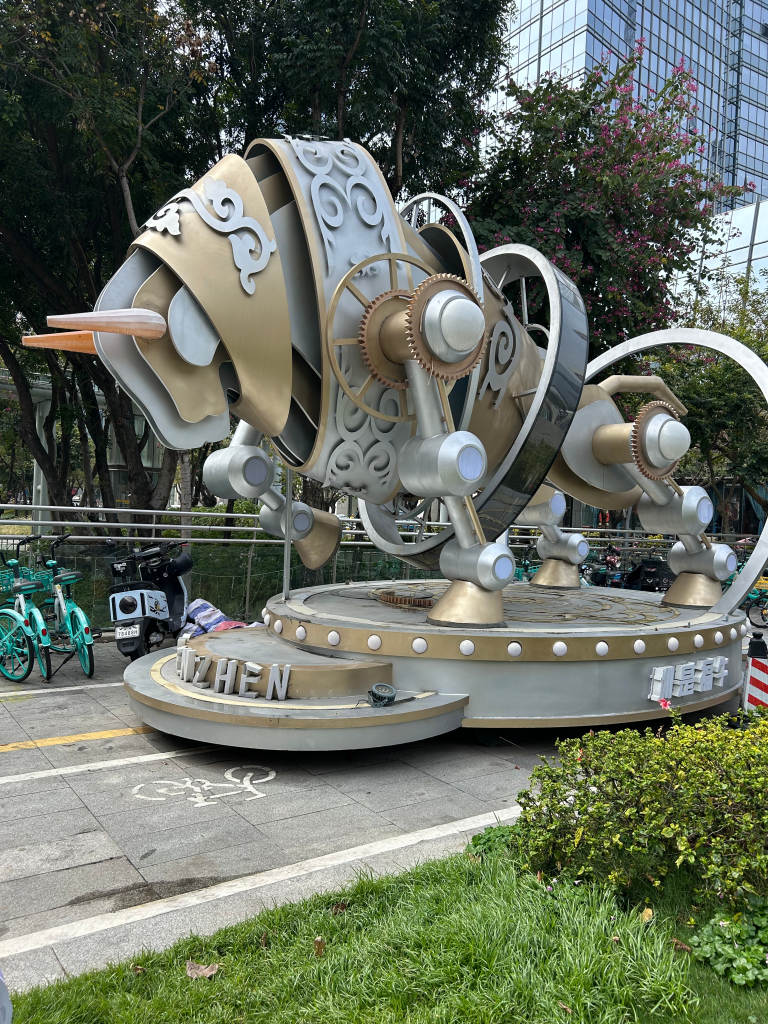
^ Shanghai has a bull that’s an exact replica of the one on Wall Street, it’s only fitting Shenzhen has this huge automaton one.
My final stop on this trip was Guangzhou.

Guangzhou, also known as Canton, is the capital and largest city of Guangdong province. Guangdong is the part of China where people the Cantonese dialect that people in the US may have heard of (most Chinese immigrants to the US pre-1990 were from Guangdong). Today it is a city of nearly 20 million people, and has been an important trading port for silk and other commodities since the time of the Roman Empire.

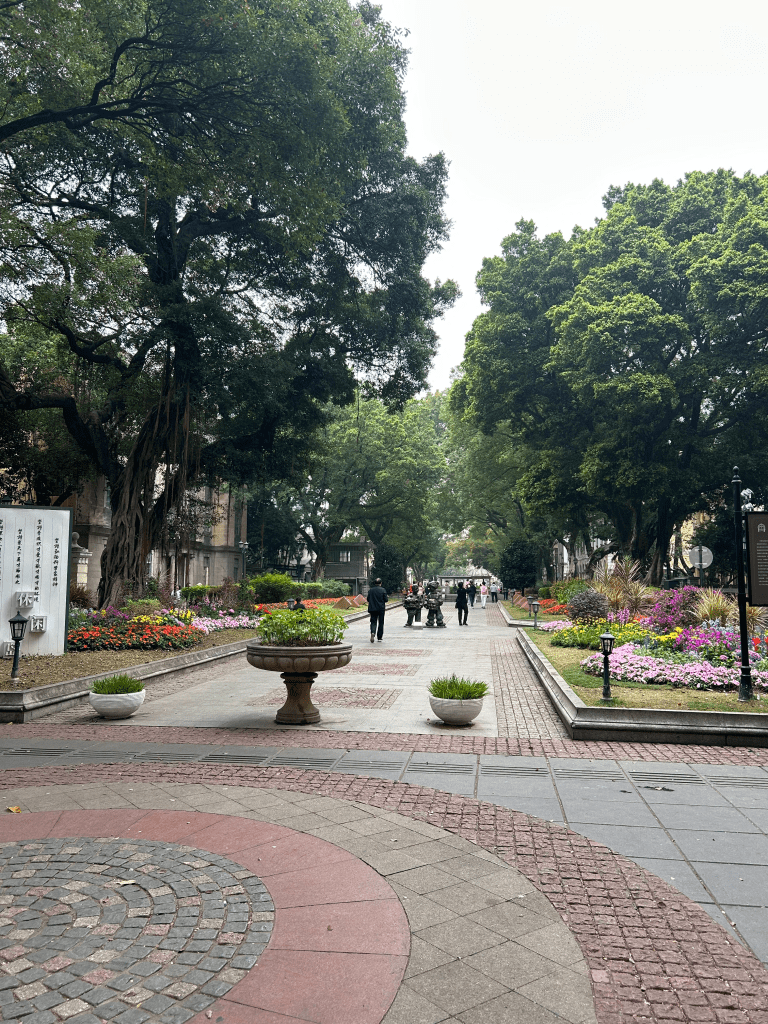
^ Shamian Island neighborhood. Similar to Shanghai, in the 19th century Guangzhou had parts of it carved out for European powers to headquarter their trading operations in the city. This small island (literally “sandy field”) in the Pearl River was where the French and British colonial administrators resided. Now it is a quiet neighborhood with noticeably European architecture. The building style combined with the native plants reminded me of parts of Charleston, South Carolina.
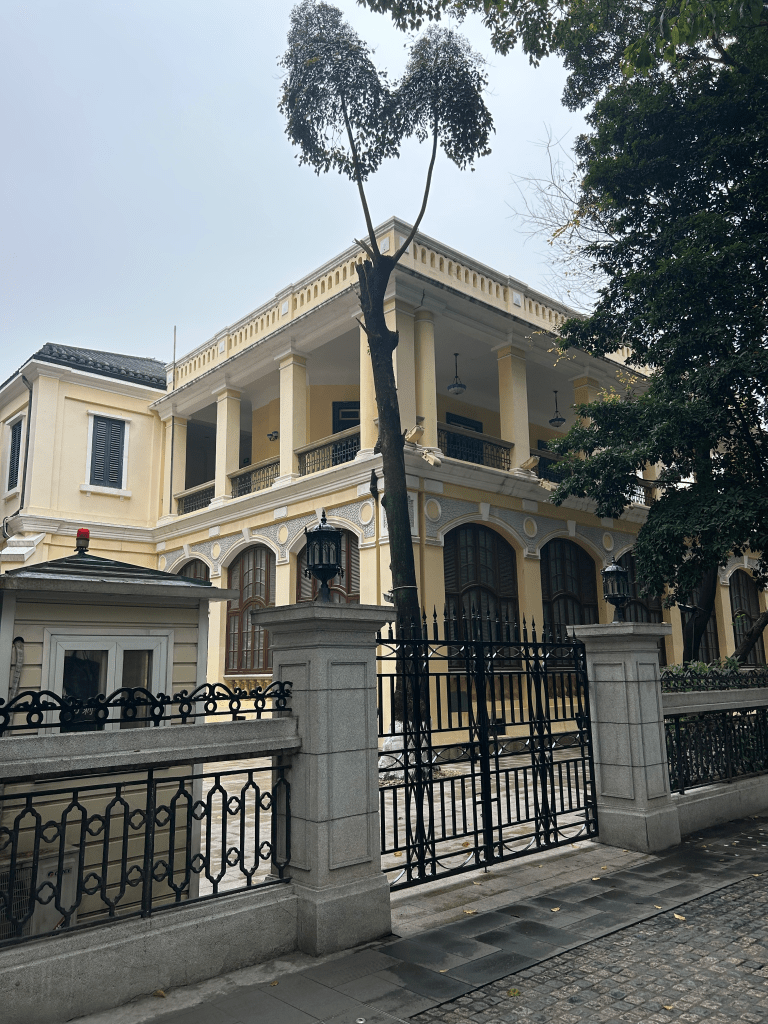

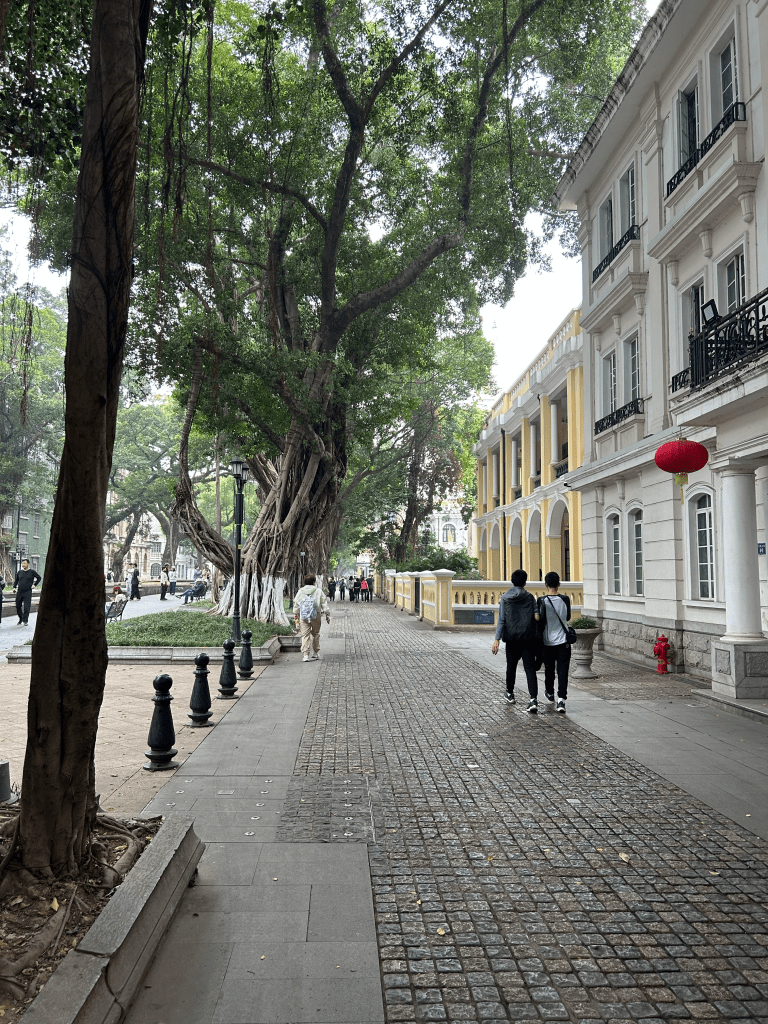

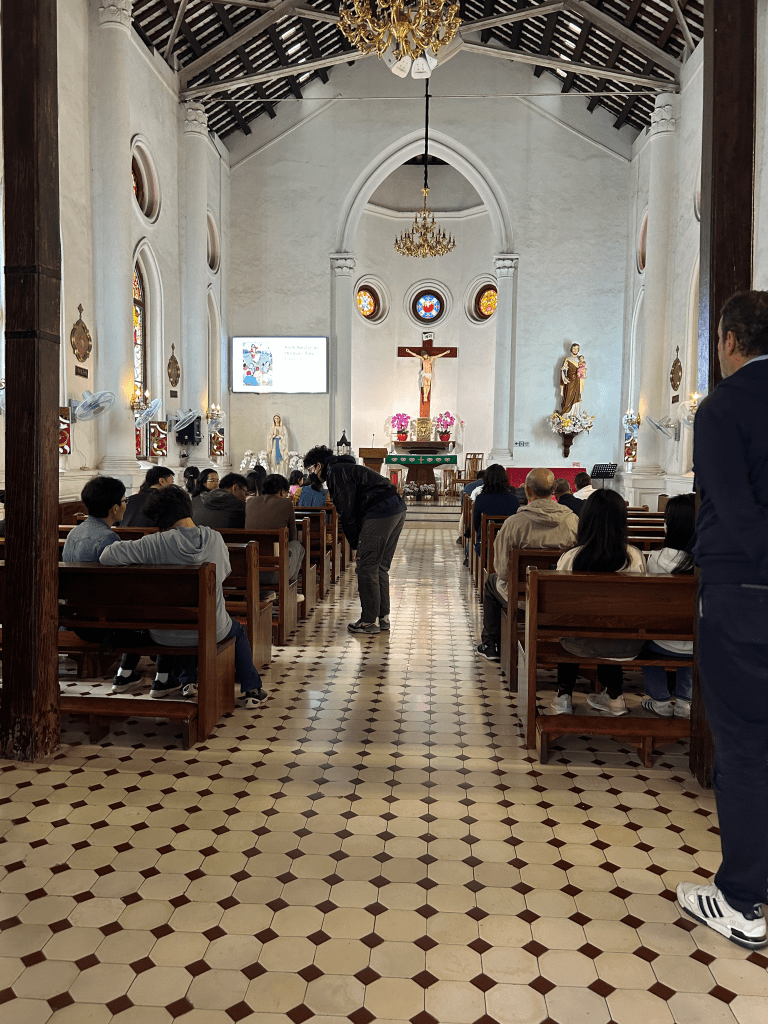
^ Catholic church in Shamian.

^ Dr. Sun Yat-sen Memorial Hall. Sun is seen as a founding father of modern China, and is officially honored both on the mainland and in Taiwan. He was the leading figure in the 1911 revolution that overthrew the Qing dynasty, the last imperial dynasty in Chinese history, and established the Republic of China. He was from Guangdong province.

^ The two decades after Sun Yat-sen helped create the Republic of China were full of chaos and instability. The new government was weak, and soon China was effectively divided into regional regimes controlled by competing military commanders (known as the Warlord Era). This is a memorial to the martyrs of a failed uprising against the warlord of Guangdong in 1927.

^ I really like the amount of trees Guangzhou has everywhere.
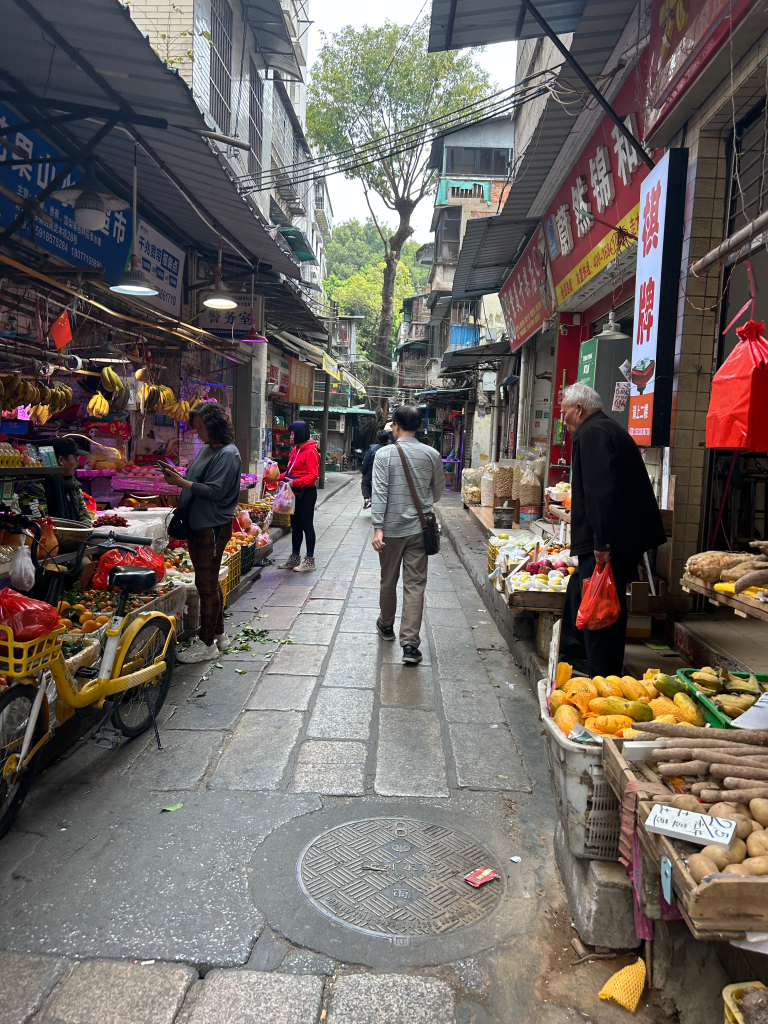

^ Walked up nearby Baiyun Mountain where you can get a glimpse of the city. It was clear and blue sky in the morning when I started, but the clouds and fog had rolled in by the time I got to the top.

^ The Pearl River
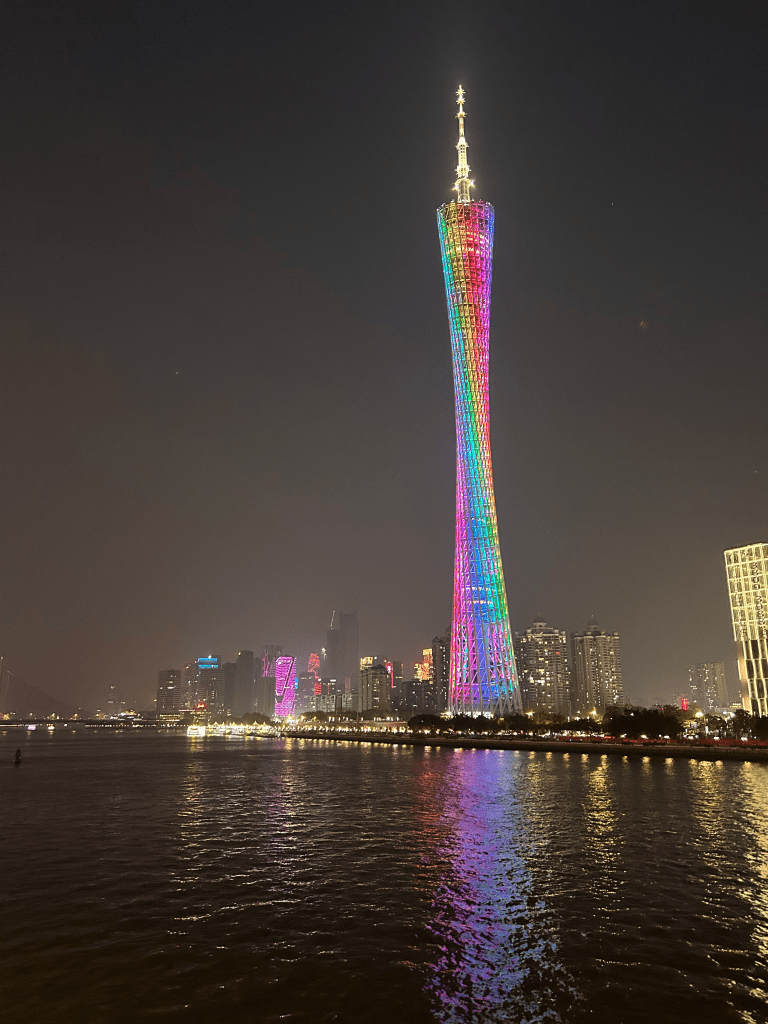
^ Canton Tower

^ They love a pedestrian bridge in China
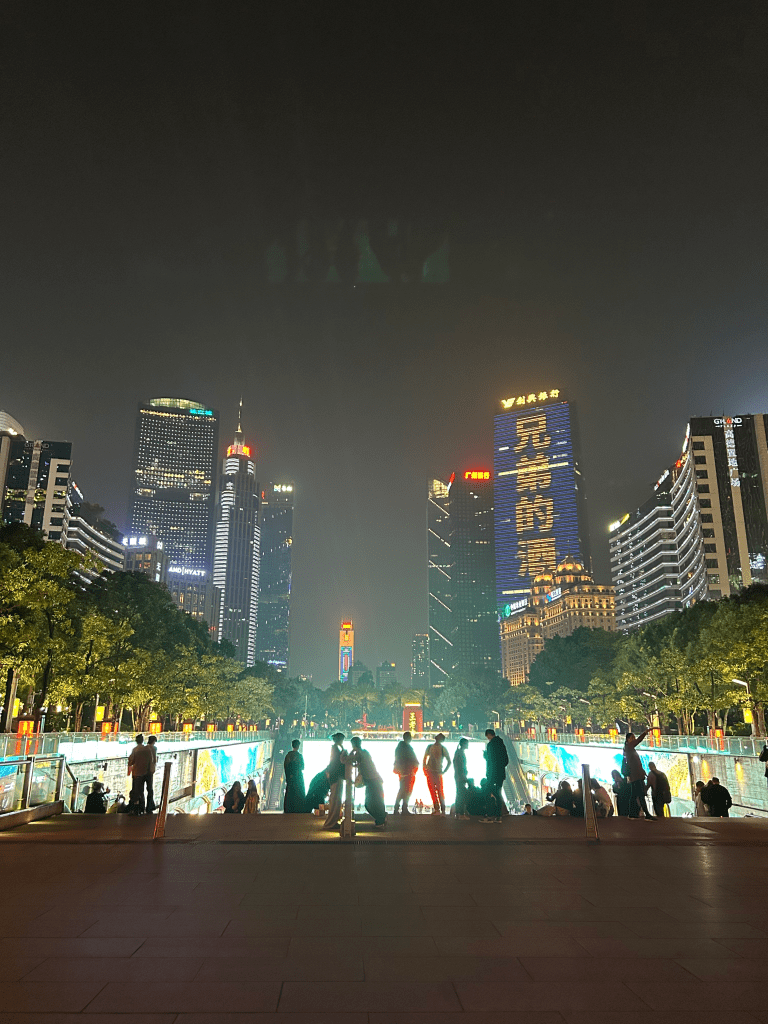
In the city center’s hi-tech area.
All in all, I had a really great time.
That’s all I’ve got for now, hope you enjoyed it and stay tuned for more content.
Patrick

 Pat's Blog
Leave a reply to Anna Cancel reply